Staatsbosbeheer manages the dunes on Texel, where birds rest between the beach and the polders on their way north in spring and south in autumn. It asked us for an observatory that birdwatchers and school groups could use in all weathers, and that the birds would not notice. The building is 180 m² on a site of 2 200 m². Ingrid Solberg led it from the first site walk in 2019.
Buried
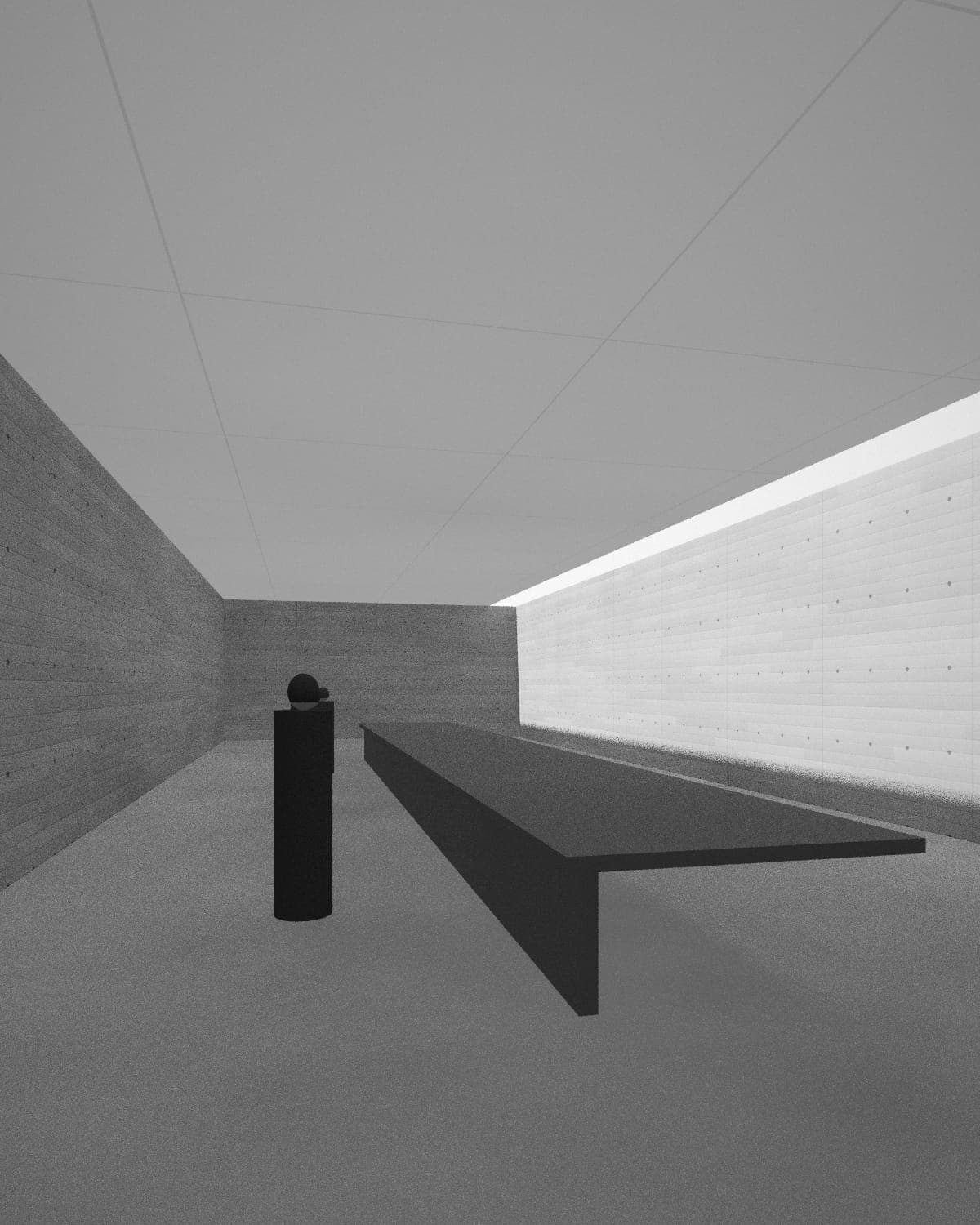
The observatory is one concrete room buried in a dune. Only the roof slab and a single slot show above the sand. Inside, the room is fitted out in oak, with benches along the slot and shelves for field guides, and it is dark except for the slot. Section A–A (S-301) shows the room, the sand over it and the line of sight out to the beach.
The slot is 14 m long and 400 mm high, set at the eye level of a seated adult. It is narrow enough that a person inside cannot be seen from the beach, and long enough to follow a flock along the shoreline without changing seat. There is no glass in it: the room is open to the air along the slot and closed everywhere else, with a deep sill that keeps the rain out.
Fig. 02The slot is 14 m long and 400 mm high.Photo: Jasper Kroon
We pushed a plaster model into a tray of sand and moved the slot until the figure inside disappeared. That is the height we built.
Femke de Vries, model maker
Shell concrete
The concrete is made with shell aggregate from the island's beaches, so the walls are pale and fine-grained and close in colour to the sand they hold back. Holm Bridge & Shell designed the room as a buried box, walls and roof cast together, heavy enough to carry the dune and to stay put as the water table rises and falls beneath it.
Fig. 03Shell aggregate from the island's beaches.Photo: Jasper Kroon
Visitors arrive by a stair up from the beach, cut into the dune and walled in the same concrete. It turns once before the door, so that nobody climbing it appears on the skyline. The west elevation (E-401) is almost all sand.
Putting the dune back
Burying a building means moving the dune twice. Before we poured anything, we photographed it from forty fixed points so its profile could be rebuilt. The marram grass was lifted in clumps, stored in the lee of the dune and replanted by hand in October, with Field Office Landscape advising on where each clump should go. The observatory opened in 2022. Today only the slot and the roof edge are visible, which was the brief. The observatory is open from dawn to dusk, and there is no lighting inside.
Fig. 01Only the roof slab and the slot show above the sand.Photo: Jasper Kroon
Fig. 04The stair up from the beach.Photo: Jasper Kroon
Fig. 05From the beach at low tide.Photo: Jasper Kroon
100%
Not to scale
Ctrl/⌘ + scroll or pinch to zoom · drag to pan · + − 0 and arrow keys when focused
Site plan of Texel Dune Observatory at 1:100. Walls in solid black (400 mm concrete), openings as breaks with glazing lines, structural grid lettered and numbered; spaces: observation room, stair.